

Nature recovery
This page explores nature recovery at the site and how historical and modern human activities have shaped the landscape. It highlights visible features such as ridge and furrow earthworks, which are evidence of medieval farming practices and help reveal how the land was managed in the past. The page also examines how later interventions, including man-made flood defences, have altered natural processes and habitats, influencing how ecosystems function and recover today.
What is nature recovery and why does it matter?
Nature recovery is about helping the natural world bounce back. Across much of the UK, habitats have been lost, simplified, or heavily managed, leaving less space for wildlife and fewer opportunities for ecosystems to function as they should. As a result, the UK is now considered one of the most nature-depleted countries in the world. According to the Natural History Museum’s Biodiversity Intactness Index, the UK ranks 228th out of 240 countries, with around half of its original biodiversity remaining. England, where the Open University campus and the OpenLiving Lab are located, has the lowest biodiversity intactness in the UK at 47%, compared with Scotland at 56%, Wales at 51%, and Northern Ireland at 50%.
Recovering nature means reversing this trend by improving habitats, increasing biodiversity, and allowing natural processes to return.
Much of this species loss has been driven by centauries of agricultural and urban expansion, driving land-use changes from the semi-natural and once primeval landscape into largely human use with little regards to nature for a historical perspective. Where land is depleted in biodiversity by intensive farming, urban areas are often build upon them, resulting in an additive effect of species loss and local extinctions that result in national and potentially global ones as this trend continued.
Nature recovery in practice: the OpenLiving Lab
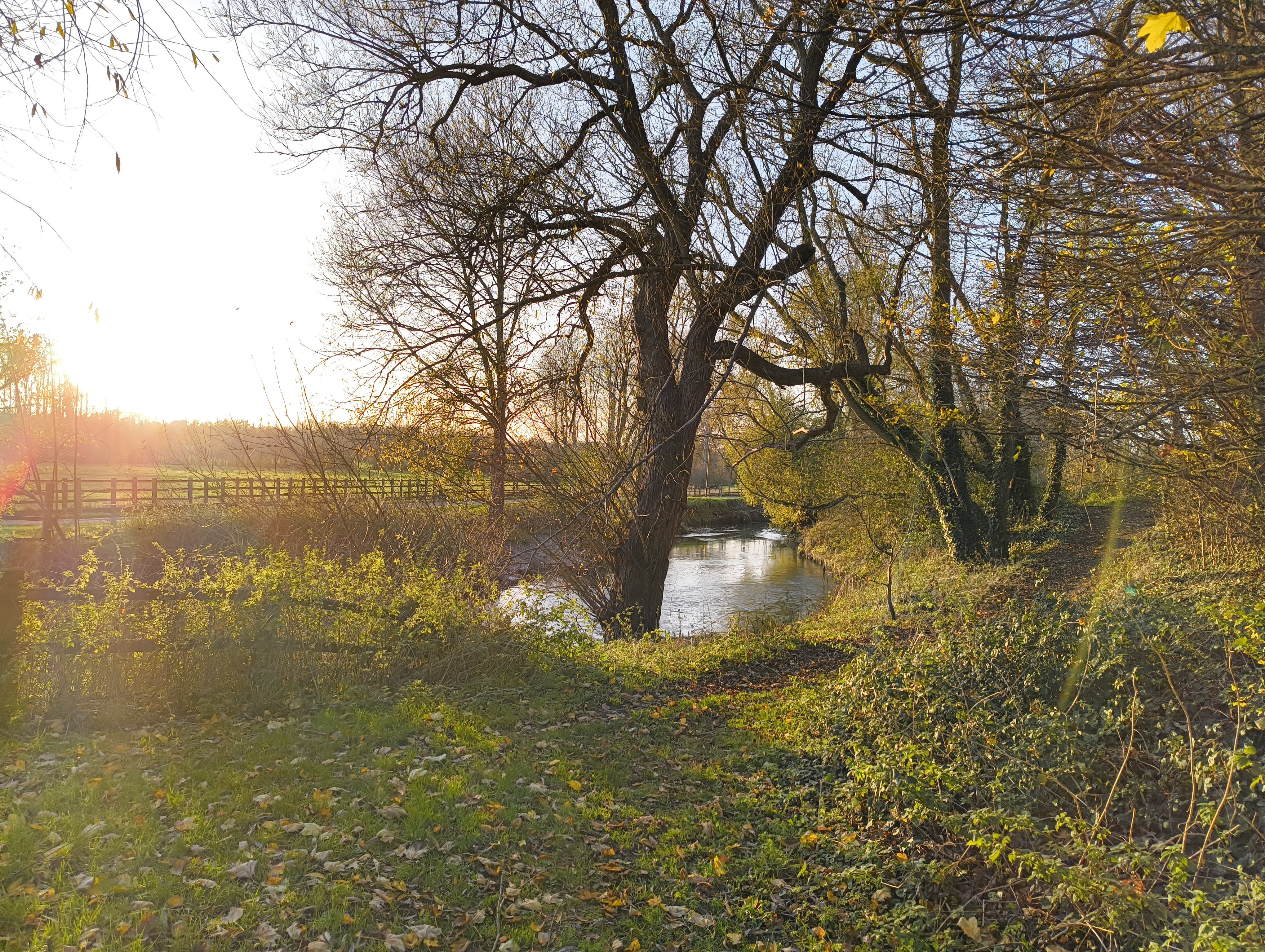
The OpenLiving Lab (OLL) is a practical example of how nature recovery can be achieved in an urban setting. Located on the Open University campus in Milton Keynes, the site makes use of undeveloped land within the floodplain of the River Ouzel. This land cannot be built on due to regular flooding, but rather than leaving it unused, it is being actively managed to support nature recovery. The site has also been heavily influenced by surrounding land uses. A prominent raised bank, created as part of flood defences during the university’s construction, adds an unusual topography. This variation in elevation and hydrology creates a range of conditions across the site, forming part of what we are studying and contributing to its ecological potential.
Restoring habitats and supporting biodiversity
Restoring this site involves restoring riparian woodland and floodplain meadow habitats, both of which are important for wildlife but have declined across the UK. The aim is not to create a fixed or tidy landscape, but to support a living, changing system where plants, insects, birds, mammals, and other species can establish and thrive over time. In doing so, the site also supports wider benefits such as carbon storage, water regulation, and resilience to environmental change.
Understanding what works
The Living Lab is also about understanding what works. The site is monitored using a combination of environmental sensors and biodiversity surveys, including acoustic recording, camera trapping, and invertebrate sampling. This allows us to track how habitats and species change over time, and to link those changes to environmental conditions and management decisions. This evidence is essential if nature recovery is to be scaled up beyond individual sites.
Reconnecting people with nature
Importantly, the OLL is not hidden away. It is part of a working university campus and is accessible to students, researchers, and the public. This creates opportunities for people to experience nature recovery first-hand and to better understand the role that urban spaces can play in supporting biodiversity. This is another key facet of nature recovery; not just that it is allowed to revert to a more natural state with enhance biodiversity and species richness, but that it is also enjoyed by people. Unfortunately in conjunction with having among the worst biodiversity in the world, the UK is among the least nature-connected ranking 59th out of 65 countries. A survey by the National Trust and the University of Derby found that 62% of people rarely or never stop to listen to birdsong or notice everyday wildlife such as bees and butterflies. Therefore, one of our main missions is to improve connectedness to nature which is a key component of its recovery.
By using land that could not be developed for other purposes, the OpenLiving Lab shows that nature recovery does not always require large, remote reserves. Even within built environments, there are opportunities to create space for nature, and to support both biodiversity and people at the same time.


