Trees and plants
Riparian Woodland
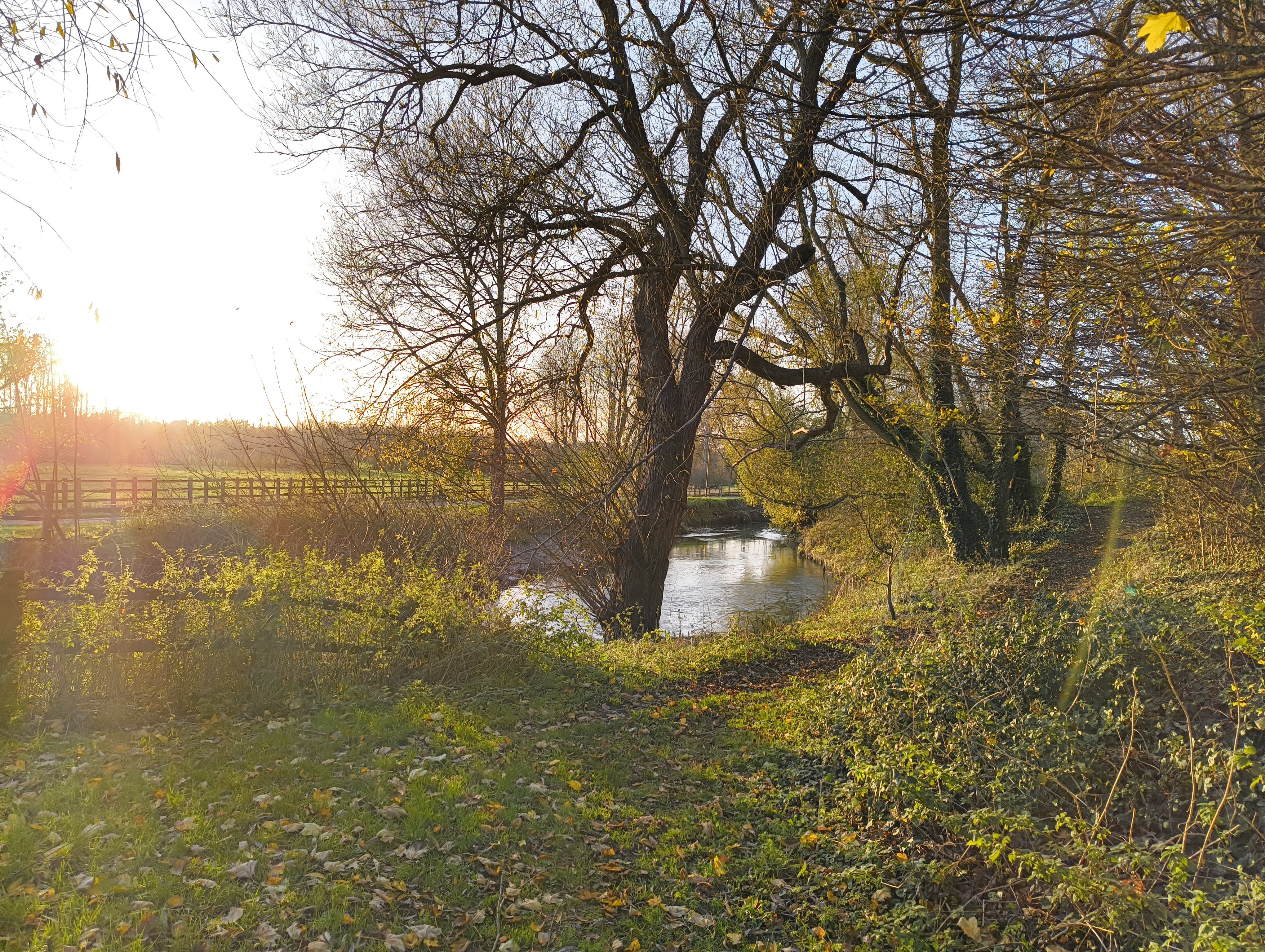
In our Riparian Woodland area, large trees like Willows have lined the river’s edge for decades, if not hundreds of years, stabilizing the riverbank and providing habitat for wildlife and riverside plants. There is also a small spinney with trees like Blackthorn, Ash and Dogwood that we are allowing to regenerate.
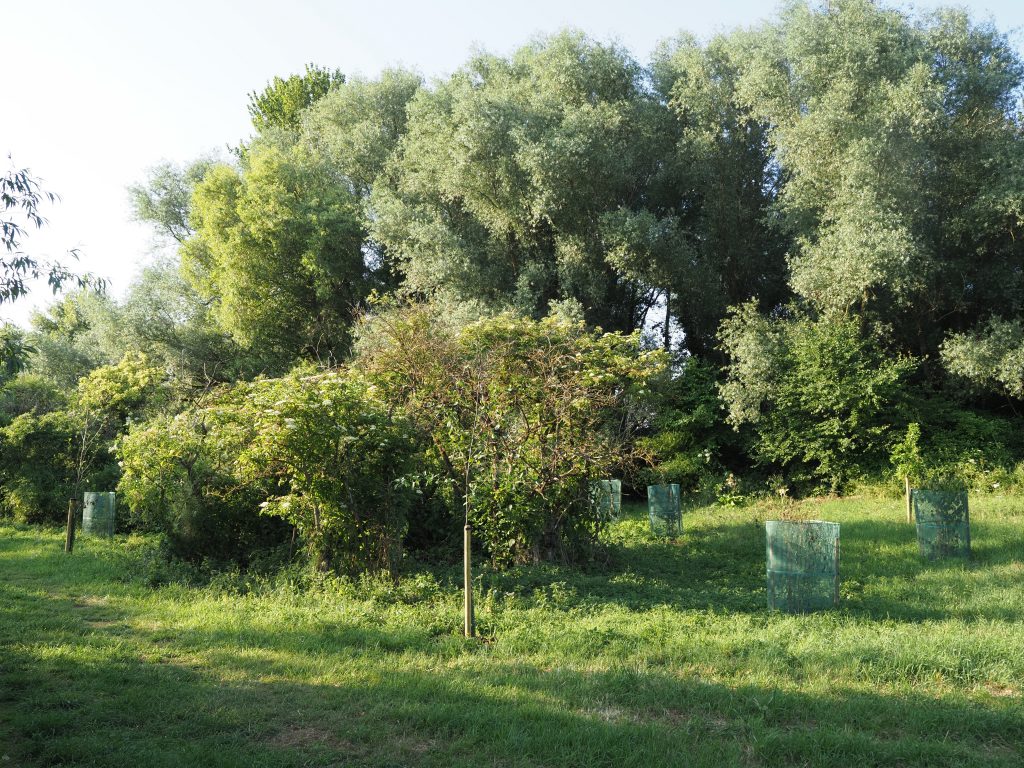
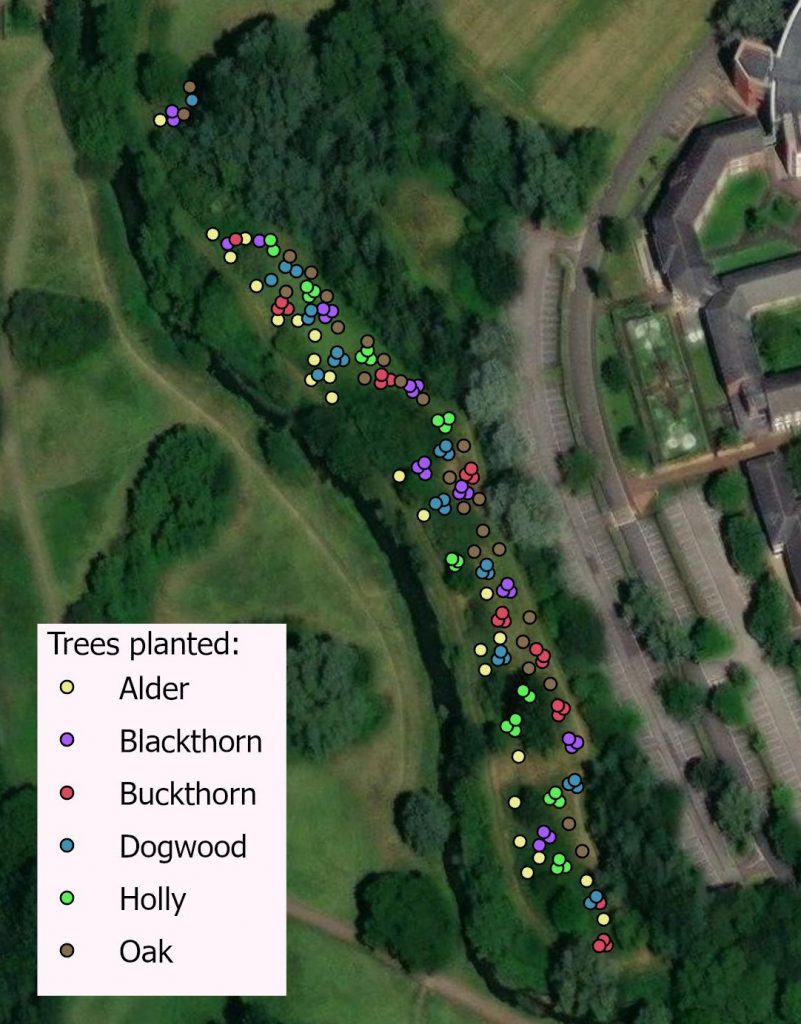
We have planted 150 native trees like Common Alder (Alnus glutinosa), Dogwood (Cornus sanguinea), Blackthorn (Prunus spinosa), English Oak (Quercus robur), Buckthorn (Rhamnus cathartica) and Holly (Ilex aquifolia) on the slope that leads down to the riverbank) and have been recording their height to monitor how they are growing. Subsequent planting over the next few years will allow a diverse age of trees to grow, along with natural regeneration, creating complex habitat for wildlife and other woodland plants.
Surveys of the plants in the riparian woodlands illustrate the range of habitats present in this small area, from aquatic plants like Great Yellow-cress (Rorippa amphibia) and Fool’s Watercress (Helosciandium nodiflorum) on the riverbank, grassland species like thistles on the paths and slopes, to woodland species like Primrose (Primula vulgaris), Lords-and-Ladies (Arum maculatum) and Ground Ivy (Gelchoma hederacea) in the spinney and existing woodland. See full species list below.

Several alien non-native species have also arrived and spreading in the existing urban woodland, including Oregon-grape (Berberis aquifolium), Garden Current (Ribes rubrum) and Cotoneaster. We will be monitoring these and removing them where necessary.


Our species records are being put on iSpot, an OU-led citizen science platform where you can make your own observations, join the community and learn about biodiversity in your area.
Plants recorded so far in the OpenLiving Lab riparian woodland:
| Scientific name | Common name |
| Acer pseudoplatanus Aegopodium podograria Alliaria petiolata Alnus glutinosa Anthriscus sylvestris Arum maculatum Bellis perennis Berberis repens Brachythecium rutabulum Calystegia sepium Cardamine amara Cirsium acaulon Cirsium arvense Cirsium eriophorum Cirsium vulgare Cornus sanguinea Cotoneaster sp. Crataegus laevigata Crataegus monogyna Dactylis glomerata Dipsacus fullonum Epilobium hirsutum Epilobium tetragonum Ficaria verna Galium aparine Geranium dissectum Geranium molle Glechoma hederacea Hedera helix Helosciadium nodiflorum Heracleum sphondylium Holcus mollis Hyacinthoides sp. Impatiens sp? Iris foetidissima Kindbergia praelonga Lamium album Lamium purpureum Lonicera periclymenum Medicago lupulina Narcissus pseudonarcissus Picris echioides Poa annua Populus sp. Potentilla repens Primula vulgaris Prunus spinosa Quercus robur Ranunculus acris Ranunculus repens Ribes rubrum Rorippa amphibia Rubus fructicosus agg. Rumex obtusifolius Rumex pulcher Rumex sanguineus Rumex x acutus Salix sp. Sambucus nigra Sonchus asper Tanacetum vulgare Taraxacum agg. Urtica dioica Veronica hederifolia subsp. lucorum Vicia lutea Vicia sativa | Sycamore Ground Elder Garlic Mustard Alder Cow parsley Lords and Ladies Daisy Oregon-grape Rough-stalked Feather-moss Hedge Bindweed Wavy Bittercress Dwarf Thistle Creeping Thistle Woolly Thistle Spear Thistle Dogwood Cotoneaster Midland Hawthorn Hawthorn Cocksfoot Teasel Hairy willowherb Square-stalked Willowherb Lesser Celandine Cleavers Cut-leaved Cranesbill Dove’s-foot Cranesbill Ground Ivy Ivy Fool’s Watercress Hogweed Creeping Soft-grass Bluebell ?Himalayan Balsam Stinking Iris Common Feather-moss White Deadnettle Red Deadnettle Honeysuckle Black Medick Daffodil Bristly ox-tongue Annual Meadow grass Poplar Creeping Cinquefoil Primrose Blackthorn Oak Meadow Buttercup Creeping Buttercup Garden Currant Great Yellow-cress Bramble Broad-leaved Dock Fiddle Dock Wood Dock Hybrid Dock Willow Elder Prickly sow-thistle Tansy Dandelion Common nettle Ivy-leaved Speedwell Yellow Vetch Common Vetch |
Urban Woodland
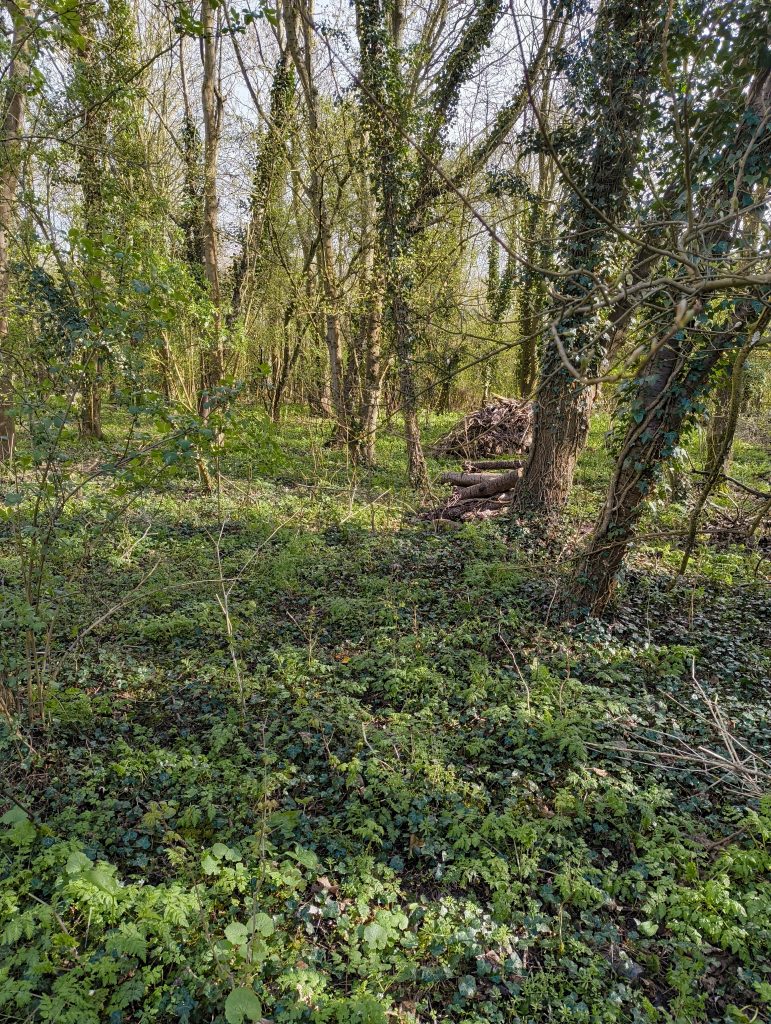
Botanical surveys in our urban woodland site in March 2026 recorded 38 species, showing that this is a valuable area for biodiversity too. The existing trees including Silver Birch, Cherry, Field Maple, Ash, Elder and Blackthorn are regenerating as saplings sprout through the undergrowth and leaf litter.
Abundant Ivy (Hedera helix), Cow Parsley (Anthriscus sylvestris), Garlic Mustard (Alliaria petiolata) and Herb Robert (Geranium robertianum) indicate that this area is quite nutrient rich. However, there were also plants more specialised to woodland habitats like Three-nerved Sandwort (Moehringia trinervia), Spindle (Euonymus europaeus) and Hedge Woundwort (Stachys sylvatica). Alien species including Daffodil and Holm Oak (Quercus ilex) also appeared at the woodland edges.