




Soil Nutrients : Cation Exchange Capacity
Plant growth depends heavily on nutrients in the soil, such as potassium, calcium, and magnesium. Plants cannot absorb these nutrients directly from soil particles. Instead, they take them up through their roots when the nutrients dissolve in soil water. In this dissolved form, many nutrients exist as ions, meaning they carry an electrical charge. When an atom loses electrons it becomes positively charged, forming a cation, and many important plant nutrients occur in this form including potassium (K⁺), calcium (Ca²⁺), magnesium (Mg²⁺), and ammonium (NH₄⁺). Soil particles help store these nutrients and stop them from being washed away by rain.
Tiny particles such as clay and organic matter often carry negative electrical charges on their surfaces. Because opposite charges attract, these surfaces hold onto positively charged nutrient ions, acting like a reservoir that keeps nutrients close to plant roots rather than allowing them to leach deeper into the soil. These nutrients are not permanently fixed in place. They can be swapped with other positively charged ions in the soil water. For example, plant roots often release hydrogen ions (H⁺), which can replace nutrient cations attached to soil particles and move them into the soil water where plants can absorb them. This process is known as cation exchange.
Two related measurements help describe how soils store and supply these nutrients. Exchangeable base cations (EBC) measure the amount of key nutrient cations, such as potassium, calcium, and magnesium, that are currently attached to soil particles and available for exchange. Cation exchange capacity (CEC) describes the total number of sites on soil particles where these nutrient ions can be held. In other words, EBC shows how many nutrient cations are present, while CEC shows how much the soil can hold overall.
Soils with a higher CEC can store more nutrients and supply them steadily to plants, while soils with a low CEC lose nutrients more easily through leaching. CEC is usually higher in soils with more clay or organic matter, while sandy soils tend to have lower CEC because they have fewer charged surfaces to hold nutrients.
Measuring CEC and EBC at the OpenLiving Labs
Processing of these data involves using different chemicals to ‘flush’ the ions from the soils.
Exchangeable base cations (EBC) and cation exchange capacity (CEC) were measured using an ammonium acetate extraction method. This method works by replacing nutrient cations attached to soil particles with ammonium ions, allowing the nutrients to be washed out of the soil and measured.
Approximately 10 g of air-dried soil per sample was weighed (9.5–10.5 g) and placed into a leaching tube lined with cotton wool. The tube was first rinsed with ammonium acetate solution to ensure the system was clean and ready for extraction. A 50 mL solution of ammonium acetate (1 N NH₄OAc, approximately 1 mol L⁻¹, pH 7) was then added to the soil sample. This solution replaces nutrient cations attached to soil particles with ammonium ions, causing the original cations to move into the liquid phase. In effect, the ammonium ions displace nutrients such as calcium, potassium, and magnesium from the soil surfaces so they can be measured.
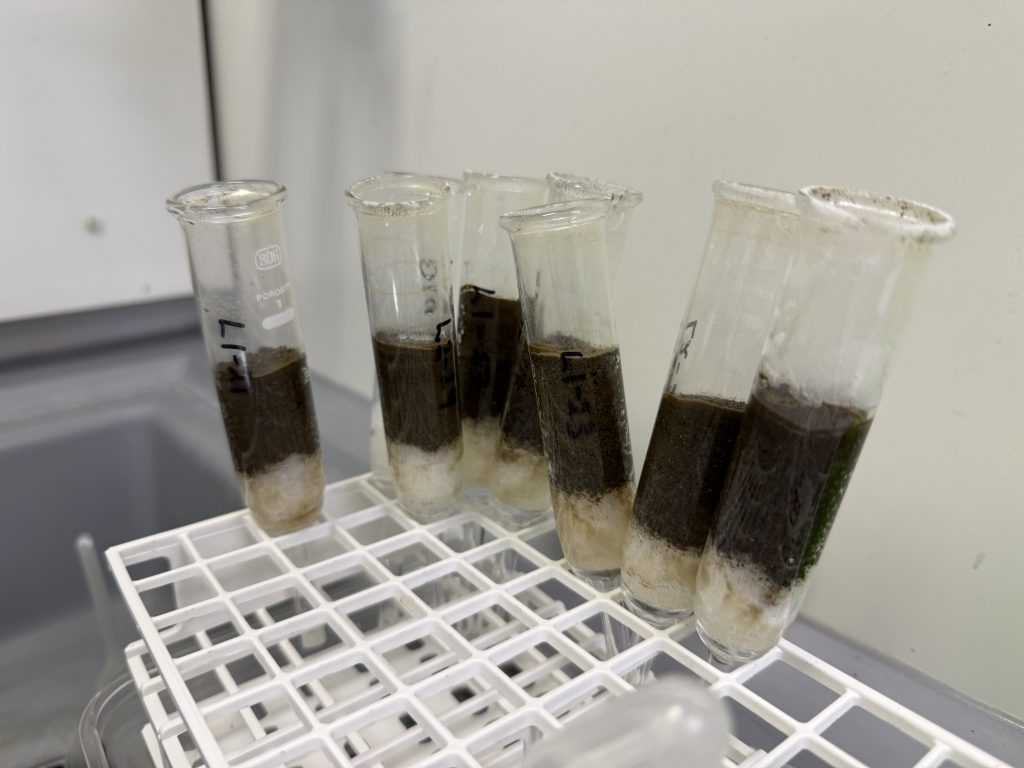
The solution was allowed to slowly pass through the soil, and the resulting leachate was collected in a 50 mL volumetric flask. The leachate therefore contained the cations that had originally been held on soil exchange sites. This process took between 24 hours and several days, depending on how quickly the solution passed through each soil sample.
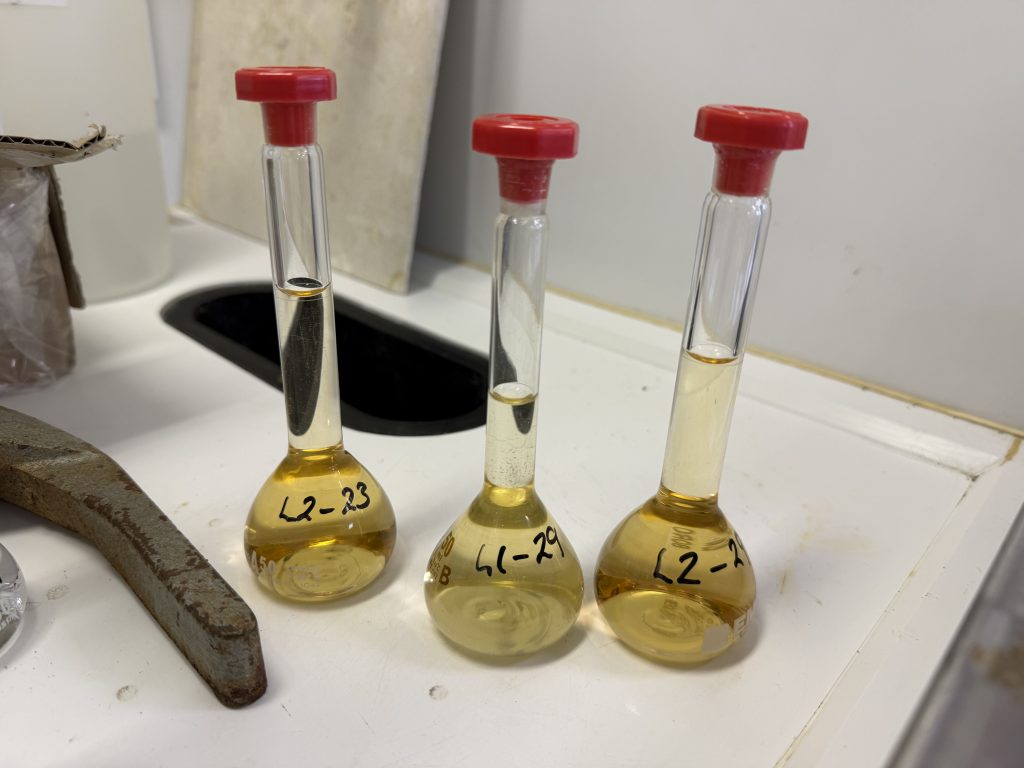
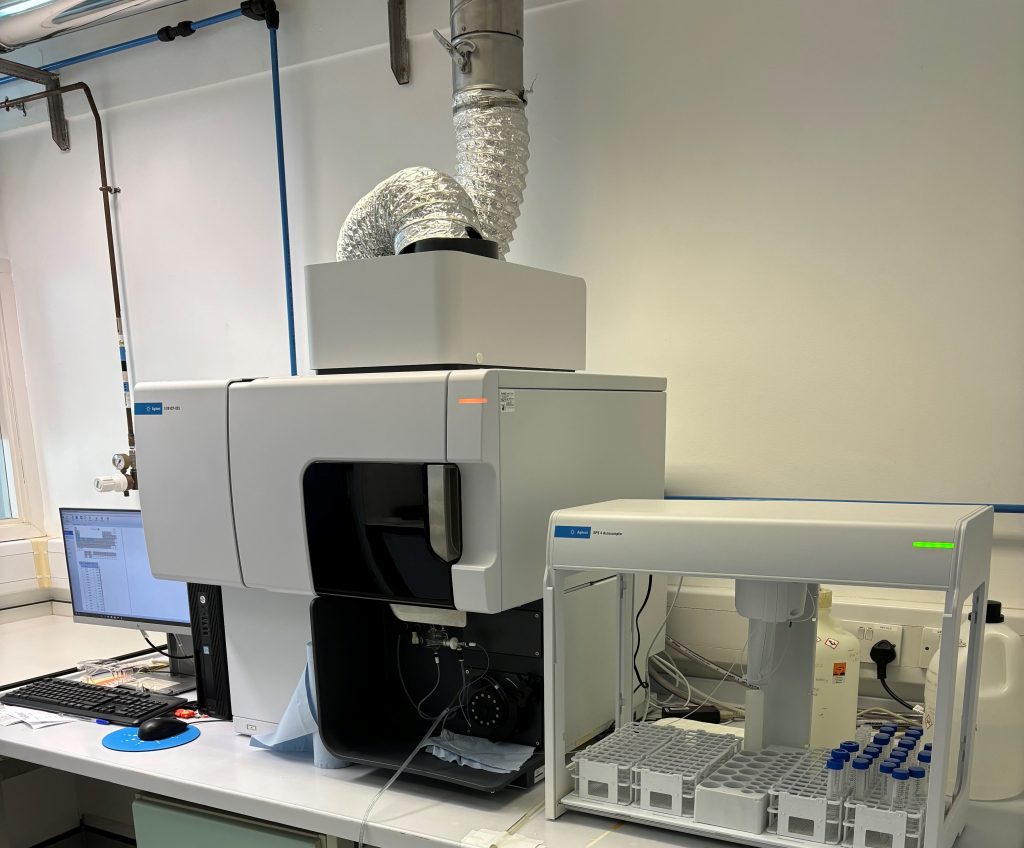
The concentrations of extracted elements were then measured using Inductively coupled plasma – Optical emission spectrometer (ICP-OES). Project Officer Josh Oakley, who operates the equipment and works in the Ecosystems Laboratories, describes what this does and how it works:
The Inductively Coupled Plasma – Optical emission spectrometer (ICP-OES) is an analytical piece of equipment which turns liquids into an aerosol, the atoms in the aerosol are excited and emit light at specific wavelengths according to the element. The light hits a detector, which calculates the concentration of the elements of interest in the sample. Some sample types for analysis involve brines, river water and acid digested soil samples.
- Josh Oakley, Project Officer
Calibration standards were used to generate calibration curves, and blank samples and replicates were included for quality control. Total nitrogen was measured separately to quantify the overall nitrogen content of the soil, including nitrogen contained in organic matter as well as inorganic forms such as ammonium (NH₄⁺) and nitrate.
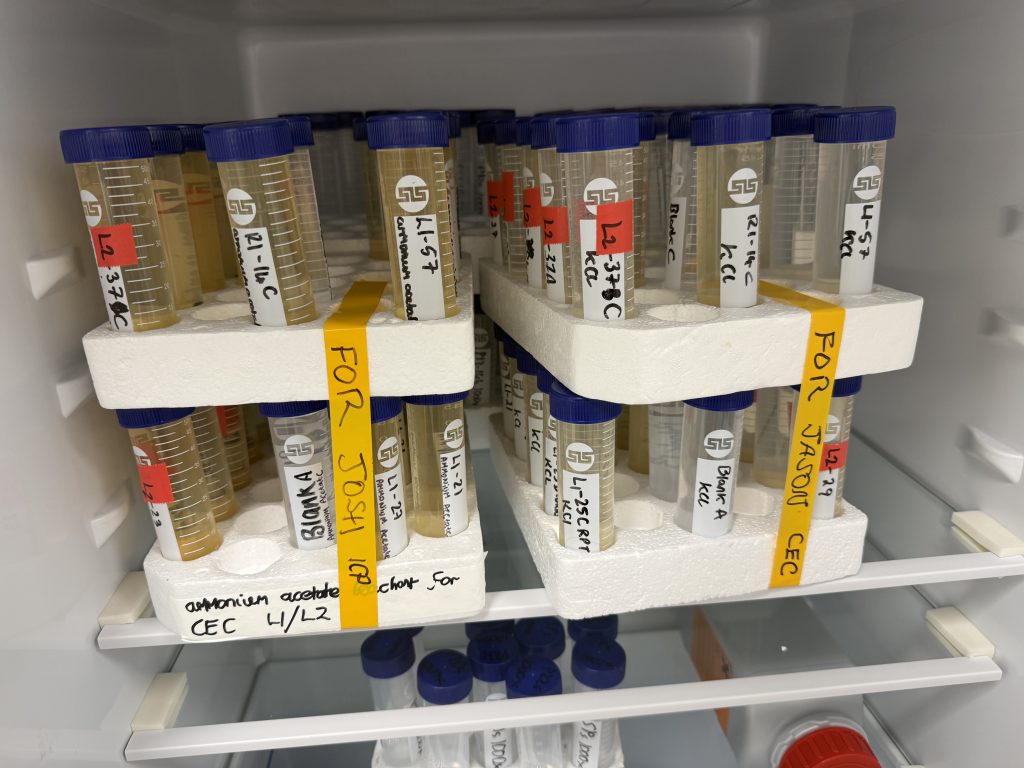
The measured concentrations of potassium, calcium, and magnesium represented the exchangeable base cations (EBC) present in the soil. These values were then used to calculate cation exchange capacity (CEC), which reflects the total amount of positively charged nutrient ions that the soil can hold on its exchange sites.


