


What we have found
This page was authored by Willow Neal in 2025.
This page will cover a bit more detail in the most common insect orders we have found across the OpenLiving Labs.
What have we found?
Diptera – the flies
Perhaps unsurprisingly, the majority (66%) of species we find across both sites are the flies, the order Diptera. Diptera is combination of two ancient greek words: two (“di”) wing (“ptera / pterón”), which is a key feature when identifying them. Another feature is the occurrence of halteres, which are small stumps that are remnants of ancestors of this order which had four wings as all other insect orders do. Diptera includes does include houseflies (Musca domestica) and the widely recognisable Blue Bottle, affectionately named Calliphora vomitoria. This order also includes the bee and wasp-mimicking hoverflies, which have an aquatic larval stage. Diptera are ecologically and economically important as they are major pollinators that are perhaps undervalued as such important parts of the biosphere.
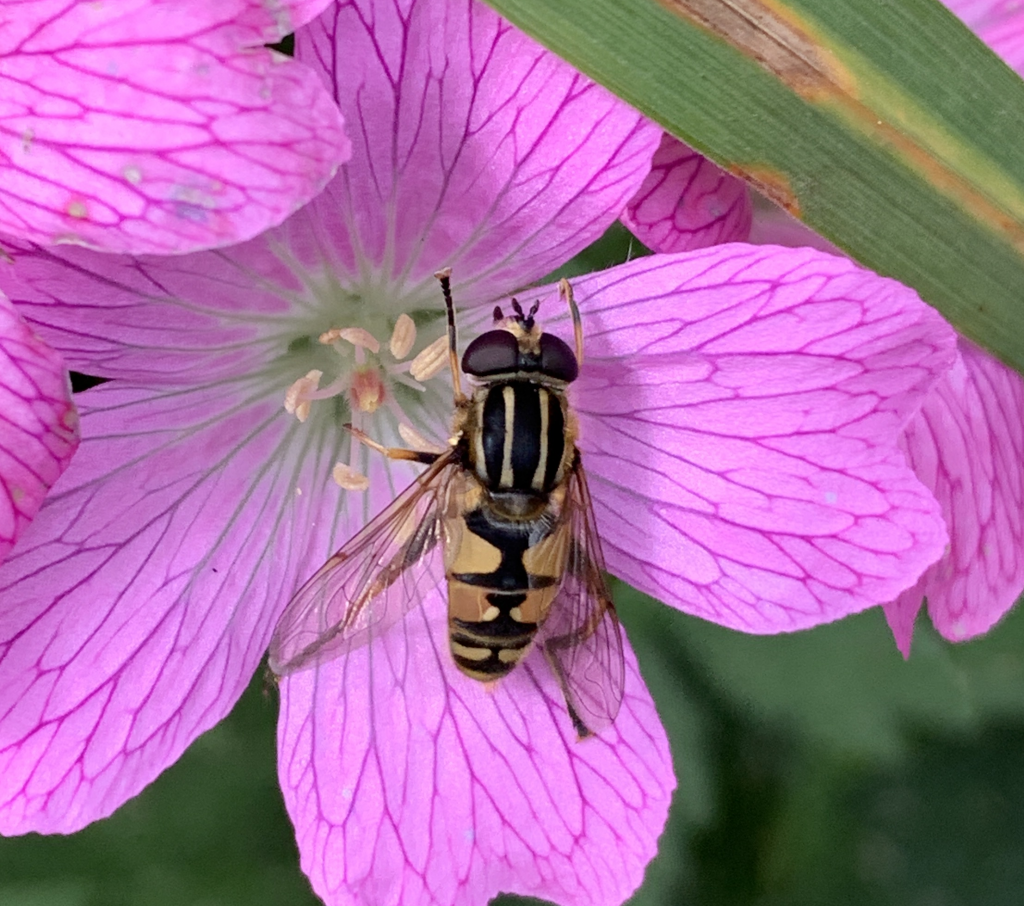
This hoverfly (Helophilus sp.) looks a lot like a wasp, which is on purpose. This is what is known as Batesian mimicry, where harmless organisms evolve colour, patterns or the body shape of a more fierce, toxic or venomous species. This species clearly has two wings, and a fast and easy way to differentiate them from a wasp or bee is their characteristic large eyes (Image: Willow Neal).
Hymenoptera – bees and wasps
Our next most common order is the Hymenoptera, which includes bees, wasps, ants and sawflies. The name Hymenoptera comes from ancient Greek, combining the word for wing (ptera) with Hymen, the Greek god of marriage. Unlike Diptera, which have only two wings, members of this order have four. Their wings are linked by tiny hooks called hamuli, and the forewings are longer than the hindwings. Many species are parasitic, and females have an ovipositor used to pierce surfaces and lay eggs. In some species, this structure has evolved into a stinger, such as those found in bees and wasps.
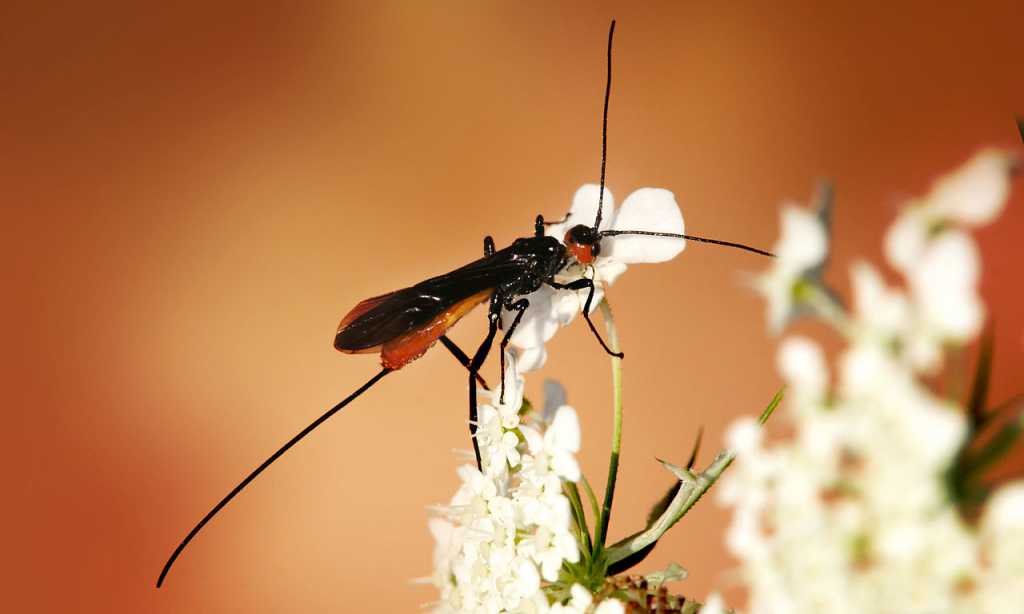
Among the Hymenoptera across the OpenLiving Labs, wasps are the most common, though perhaps not the kind people usually imagine. The familiar stinging wasps belong to the genus Vespa, whereas our most common wasps are the braconid wasps from the family Braconidae. These small, often black and red, wasps do not sting people but instead lay their eggs inside other insects such as moths and butterflies (Lepidoptera) and beetles (Coleoptera) as part of their reproductive cycle. Their high abundance at the OpenLiving labs might suggest that we also have large, healthy populations of Lepidoptera and Coleoptera on site as well.
Coleoptera – the beetles
Among the larger insects we collect, Coleoptera are the most abundant. With “koleos” meaning “sheath”, their name describes how the front pair of wings has evolved to harden into what is known as an elytra, the hardened ‘armour’ of familiar insects such as ladybirds (Coccinellidae). This has evidently been a useful survival strategy as Coleoptera are a superdiverse order, comprised over over 400,000 species and making up 25% of all described animals on earth.
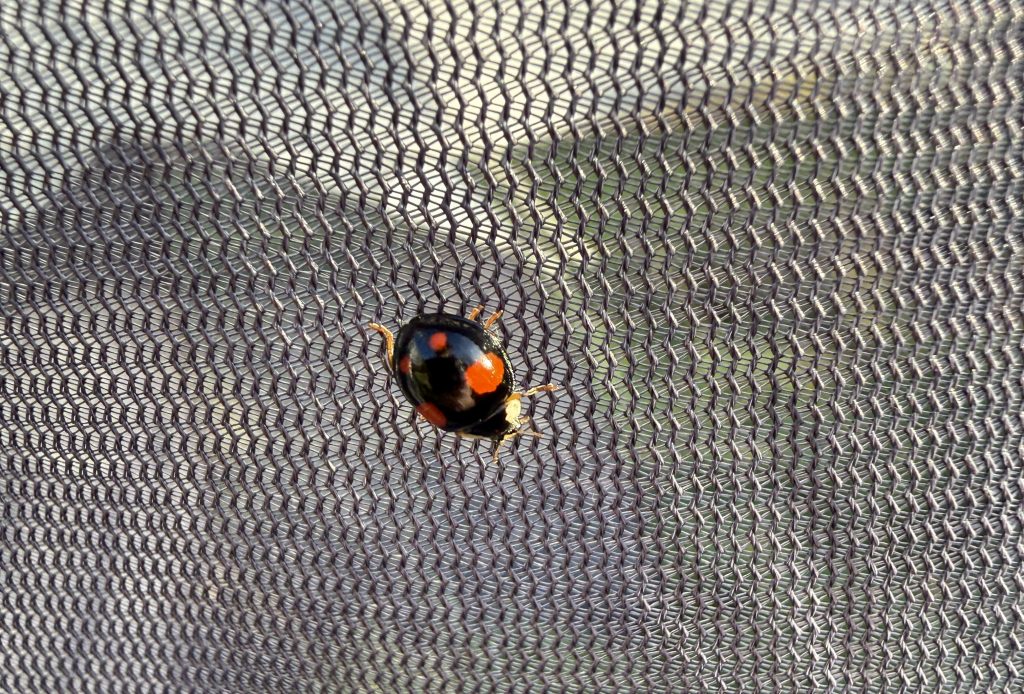
Chrysomelidae (leaf beetles) and Cantharidae (soldier beetles) are the two most abundant beetle families recorded at the OpenLiving Lab. Both are often described as “dumb pollinators”, a slightly tongue-in-cheek term referring to insects that pollinate plants incidentally. Unlike bees or butterflies, they have no specialised adaptations for pollination. Instead, they transfer pollen simply by moving between flowers as they feed. A familiar example of beetle-pollinated plants is the Magnolia. Magnolias are more than 100 million years old, predating the evolution of bees and butterflies, and are primarily pollinated by beetles. This ancient relationship highlights the ecological importance of beetles in plant reproduction, perhaps in a way which you haven’t considered before. The abundance of these beetles at the Living Labs may therefore serve as an indicator of healthy pollination processes on site, providing valuable insight into ecosystem function and success.
Hemiptera – the true bugs
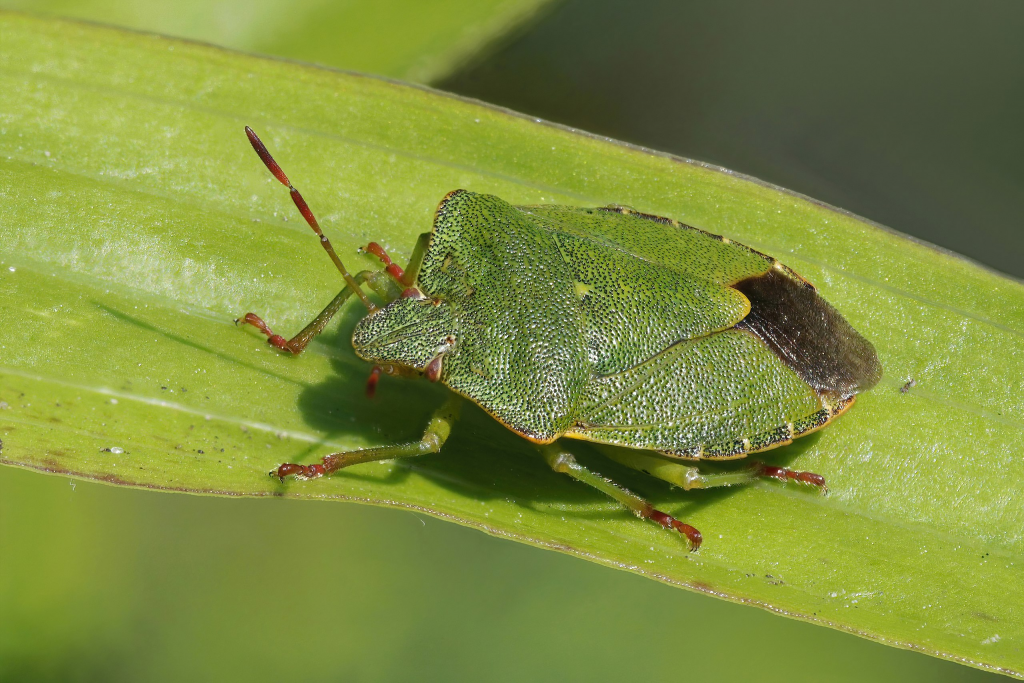
True bugs are a particular group of insects, distinct from beetles and other look-alikes. They are generally recognised by their long, thin mouthparts, which are adapted for piercing and sucking rather than biting. Many species feed on plant sap, while others are predators and feed on animal fluids. We have collected many True Bugs (order Hemiptera) across both sites. By now, you have likely noticed that “ptera”, meaning wing, has been present in every order name; and that is true for all insects and is a defining feature of this suite of animals. In the case of “Hemiptera”, the name is derived from the ancient Greek “hemipterus” which means “half-winged”, where half of the wing is shielded, and half is exposed and not covered.
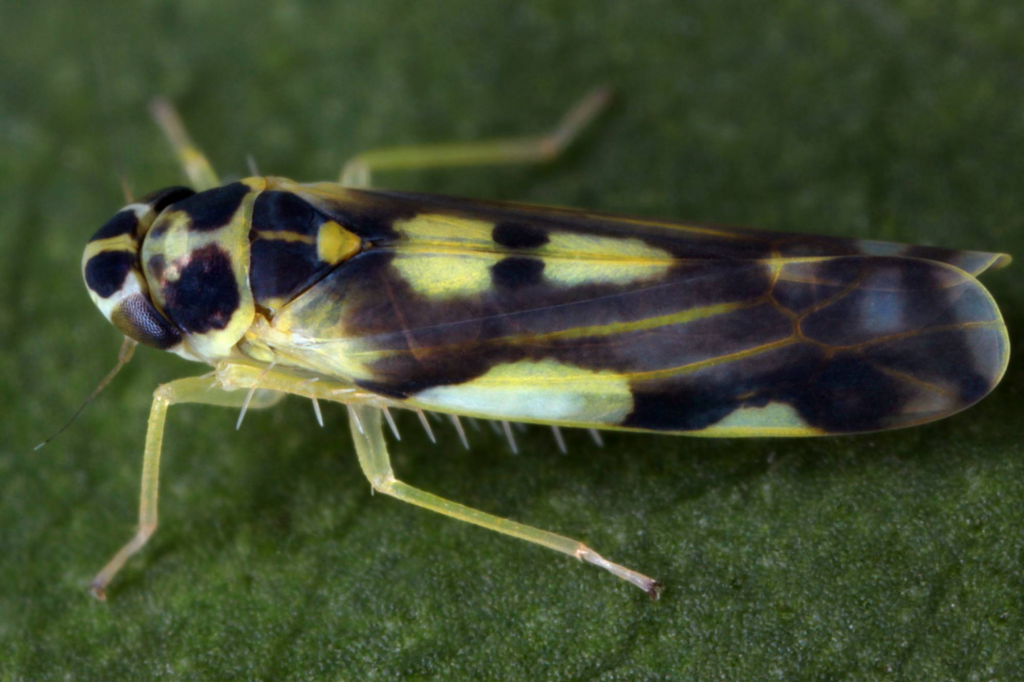
The most common Hemiptera in the OpenLiving Lab traps by some way are the Cicadellidae – the leaf hoppers. The larval stage of some species in this family spend their nymph stage (when they’re young) in a white frothy substance known as “cuckoo spit”, which looks exactly like it’s namesake. Our most common species is the Potato leafhopper (Eupteryx aurata), with it’s striking golden colouration.
Other species
We have many other species of invertebrates across the OpenLiving Labs, some unusual and rare. Below is an example of a strange and fascinating Scorpion fly most likely to be Panorpa communis from a catch in the riparian site during August 2025. These species are closely associated with woodland, and this specimen is our first and only record of any species from the order Mecoptera (“long-winged”). While not nationally rare, it is notable that the only one collected has been several years into collection, and therefore might suggest an increase or improvement of the quality of habitat required for these species.

Our principal method of using the malaise trap is effective for flying (or wandering) insects, but it does not collect everything. Many species of ground-dwelling beetles, spiders, moths and butterflies are not commonly caught using this method.
We have future plans to conduct non-destructive moth trapping and set up a butterfly transect and carry out pitfall trapping to monitor invertebrate diversity and population levels across the entire site area in a range of different ways.

References / Further reading
Chinery, M. (2005) Guide to garden wildlife. Second Edition. Bloomsbury Wildlife Guides.
Ball, S. and Morris, R. (2015) Britain’s Hoverflies. Second Edition. WILDguides.
Guglielmino, O., Ł. Kajtoch, A. Maryańska-Nadachowska, A. Lis & Ch. Bückle. (2014) ‘Italian neo-endemism in a widespread group of leafhoppers insects: A revision of the Eupteryx aurata group (Auchenorrhyncha: Cicadellidae: Typhlocybinae) using morphology, ecology and genetics’, Zoologischer Anzeiger – A Journal of Comparative Zoology, 253(4), pp. 283-308.
Lewington, R. and Thompson, K. (2019) Collins complete guide to British insects. HarperCollins.
Roy, H. (2024) Insects. DK.
van Noort, S., and Broad, R.,B. (2024) Wasps of the World a guide to every family. Princeton University Press.


